Logo Placement on Asad Tazas: What Buyers Should Approve
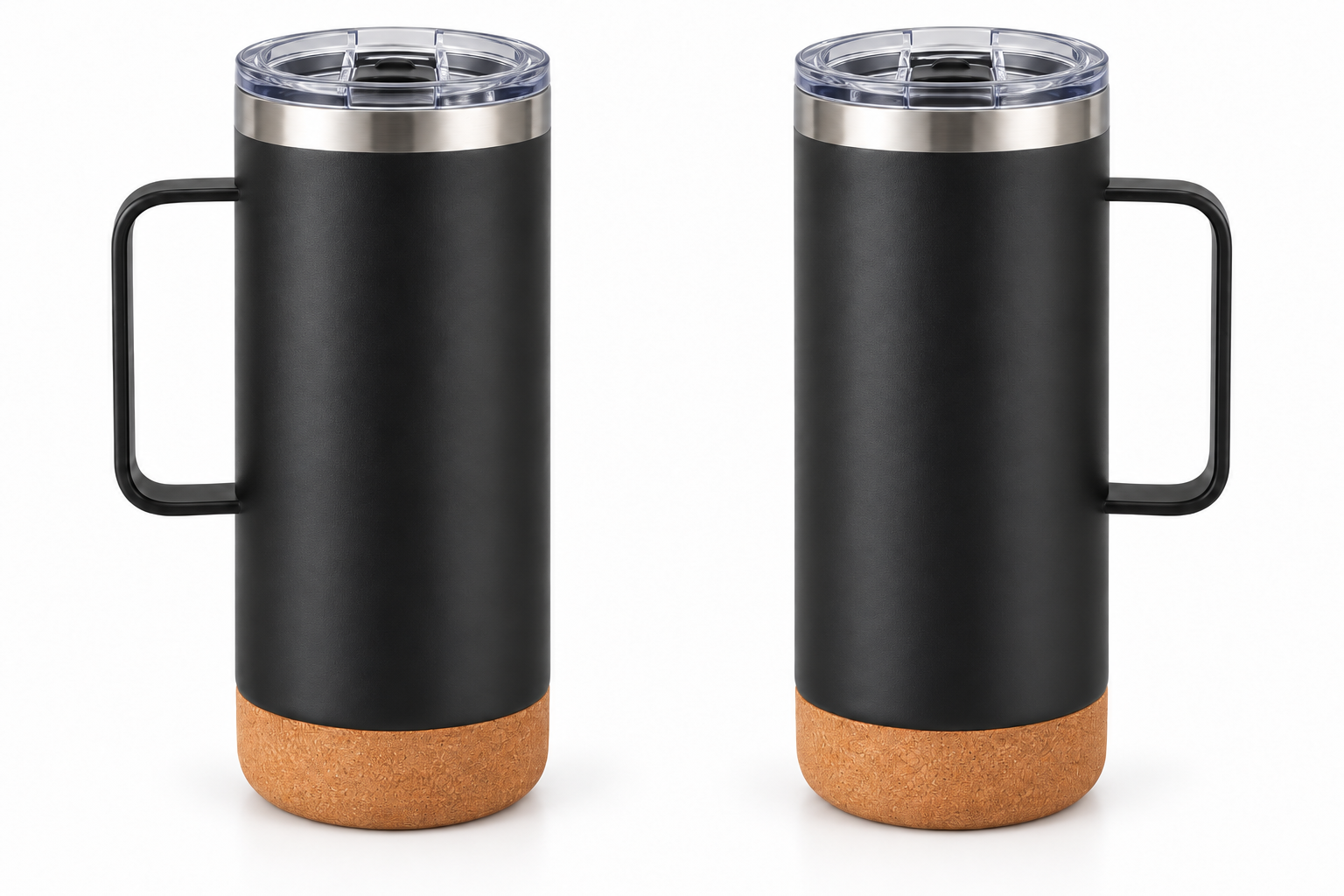
For logo placement on a handled taza, use a labelled drawing to show which face carries the artwork and how it sits relative to the handle and lid. Agree its size, position and permissible variation, then check a decorated sample before releasing the bulk order.
“Logo on the front” is too vague. A designer may mean the face shown in a product image; a buyer may mean the side visible to someone across a desk. Both can receive the same artwork file and picture a different taza.
Start with the view, not “left” or “right”
Take the model you intend to order from the coffee taza range. Show it upright in a front view and a top view, with the handle and decorated face labelled. Use those labels in the quotation, artwork proof and sample comments.
Decide who should see the logo during use: the person drinking, someone opposite them, or a customer looking at a display. “Right-handed” alone does not settle that question. Show the intended view instead.
For two-sided decoration, name each face and say what belongs there. Repeating the logo, adding a message and leaving a blank panel are different layouts. Text on the opposite face should remain readable, not become a mirror image unless that is an intentional design choice.
Check what the lid allows
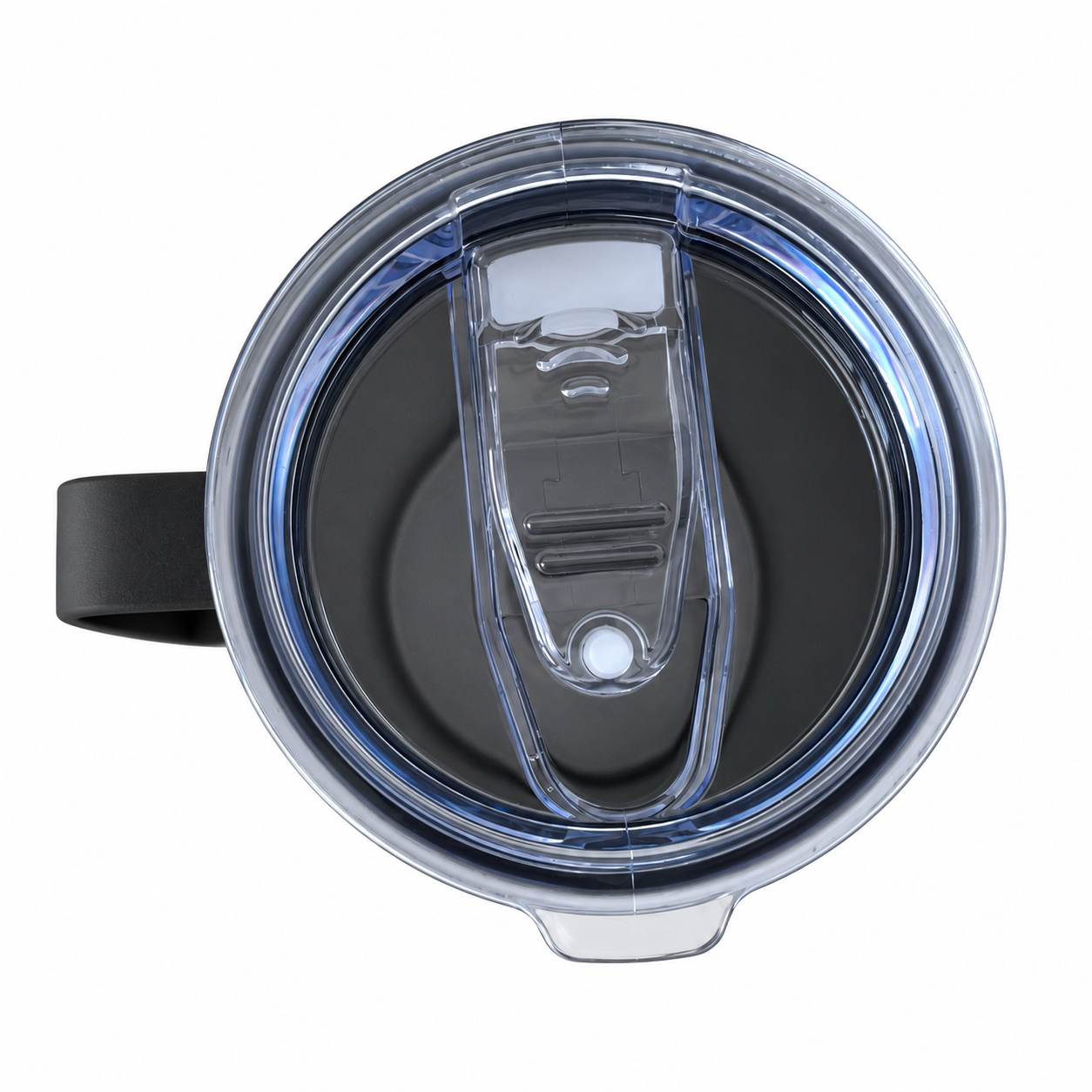
Fit the lid intended for the order. If it has a drinking opening or straw port, include that in the top view. Can the lid be fitted at different angles? Does its final position change how the logo faces during use?
A fixed logo on the body cannot guarantee alignment with an opening on a freely rotating lid. If that relationship matters, ask whether it can be controlled on this particular configuration. Keep any limitation in the specification; a photograph of one neatly aligned sample is not enough.
Give the artwork a measurable position
The drawing needs the artwork width and height, its centreline and a vertical reference. Choose a feature that both parties can identify, rather than writing “centred on the taza.” The visible panel and the overall product height may suggest different centres.
Have the proveedor confirm the usable decoration area and a feasible placement tolerance for the body, finish and process. Do not borrow a rim clearance or tolerance from another model. Include small text and taglines in this check, not just the main symbol.
A clearer instruction to send
Example only — an illustrative purchasing instruction, not a customer case or a finished production specification:
“Use the taza and lid shown in the attached drawing. Face A is the view with the handle on the right; place the logo there as shown, with the text upright. Leave Face B blank. Return a dimensioned proof showing the artwork size, reference points and proposed placement tolerance. Identify any restriction caused by the handle or lid. We will confirm the dimensions and compare the decorated sample with the agreed proof before releasing production.”
The attachments must still identify the actual model and artwork revision. This wording does not supply missing dimensions or approve a tolerance on the buyer’s behalf.
Let the physical sample settle what the mockup cannot
A mockup helps choose the layout. It cannot establish the finished appearance of a mark on a curved, coated taza.
Compare the decorated sample with the dimensioned proof, using the same labelled views. Check the readable direction and visual balance on the object itself. Photographs taken at different distances are a poor basis for judging whether two logos have the same size.
If the sample uses a different lid, finish or temporary decoration, list what remains unresolved. Colour also needs its own reference; the colour approval guide covers that separate decision. Accepting the layout does not also establish colour accuracy or cleaning durability.
Carry the decision into the order and the repeat order
Keep the drawing, artwork file and physical sample under matching revision references. The sign-off should name the approver, date and any open points, so “looks good” cannot be mistaken for permission to proceed with an unfinished layout.
Agree how placement will be checked during order inspection and how deviations will be handled. For a repeat order, confirm that the body, handle, lid, finish, process and artwork have not changed. A different body or handle belongs in a new custom drinkware brief, not under an unchanged sample reference.
Bring the drawing to the quotation
To discuss a handled-taza project, send the model reference, artwork, labelled views, quantity and embalaje requirements. If you need a decorated sample review, specify the body, lid, finish and decoration it should represent.
Buyer questions
Is there a standard side for a taza logo?
There is no universally correct side for every use. Define the intended viewing face relative to the handle, then show it on the drawing.
Is a digital mockup enough to release decoration?
A mockup alone does not establish the physical result. Use a dimensioned proof and a decorated sample, with any differences from production stated.
When does a repeat order need a new placement check?
When a change to the body, handle, lid, finish, decoration process or artwork could affect the layout. Resolve that change before production.
Respuesta directa
JOOYO Drinkware apoya a los compradores B2B que obtienen botellas de agua, vasos, tazas de viaje y tazas de café de acero inoxidable personalizados de Wuyi, Zhejiang. Los proyectos pueden incluir selección de productos, coordinación de muestras, opciones de empaque, soporte ODM y material solicitado por el comprador, contacto con alimentos, control de calidad o documentación de fábrica, cuando corresponda.
Preguntas frecuentes del comprador
¿Puede JOOYO Drinkware respaldar proyectos personalizados de bebidas de acero inoxidable?
Sí. JOOYO Drinkware respalda proyectos personalizados de bebidas de acero inoxidable, incluidos colores, marcas, empaques, coordinación de muestras y soporte ODM según el producto seleccionado y los requisitos del pedido.
¿Se pueden organizar documentos de cumplimiento o de prueba?
El material solicitado por el comprador, el contacto con los alimentos, el control de calidad o la documentación de fábrica pueden respaldarse cuando corresponda al producto, el mercado de destino y la orden de compra.
¿Dónde se encuentra JOOYO Drinkware?
JOOYO Drinkware tiene su sede en Wuyi, Zhejiang, China, y presta servicios a compradores B2B en los mercados de EE. UU. y Europa.


